
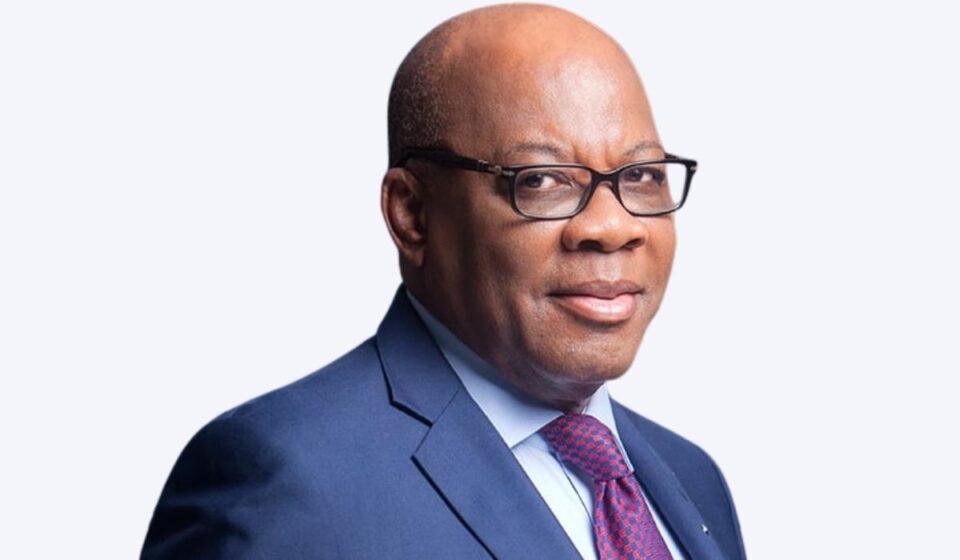
ABEOKUTA— As Nigeria prepares towards the 2027 general elections, former President of the Nigerian Bar Association (NBA), Olisa Agbakoba SAN, has described most voters as lacking democratic understanding of the process.
He added that this low knowledge has affected governance, and weakened institutional leadership, which has further undermine fiscal management and national development
Agbakoba made this remarks on Monday, during an interview on Frontline, a public affairs programme on Eagle 102.5 FM, Ilese Ijebu, Ogun State.
The senior lawyer argued that Nigeria’s biggest challenge is no longer merely constitutional deficiency, but the failure of political actors and public office holders to obey the law, implement governance structures responsibly and manage public resources transparently.
According to him, institutional decay has become so deep that even well-crafted legal frameworks are routinely ignored by those entrusted with implementing them.
He warned that governance in Nigeria has gradually shifted away from service delivery and constitutional responsibility toward electoral survival, money politics and elite power retention, adding that the consequences are now visible in rising poverty, insecurity, weak public institutions and worsening economic hardship across the country.
Speaking on the Supreme Court judgment granting financial autonomy to local governments, Agbakoba described President Bola Tinubu’s decision to pursue direct allocation for local governments as “brilliant,” but argued that many state governments have since devised methods to frustrate the implementation process.
“Local governments remain the most critical level of governance because they are closest to ordinary Nigerians and responsible for delivering basic public services such as sanitation, primary healthcare, welfare and grassroots development.
“Many state governments have instead centralized powers and resources that constitutionally belong to local councils, thereby weakening governance at the grassroots and making service delivery ineffective.
“Take Lagos State, why would the central government of Lagos State want to disrupt the functions of refuse collection and the road signage and all the things that local government should be doing, and then pass a law to say the local government funds that come will be retained at the federal, at the Lagos State level, and then shared, it makes it inefficient, it makes it inefficient”, he queried
On the ongoing debate around constitutional amendment and restructuring, Agbakoba maintained that Nigeria’s central problem is not necessarily the absence of laws but the refusal of leaders to respect and implement them.
He argued that constitutional amendments alone cannot transform governance unless political actors themselves are committed to the rule of law and constitutional limitations.
According to him, impunity has become deeply entrenched in Nigeria’s governance structure, making legal reforms ineffective in practice.
“Look, all these amendments, structural adjustments, give it whatever name. It’s meaningless if you do not have people who are willing to govern Nigeria. That’s the point. So, don’t expect magic from the constitution.
“I believe less in the constitutional framework and more in governance people. Because, we see here, what professor, late professor Madu Eze, calls impunity. Impunity simply means nobody obeys the law”, he added”
