
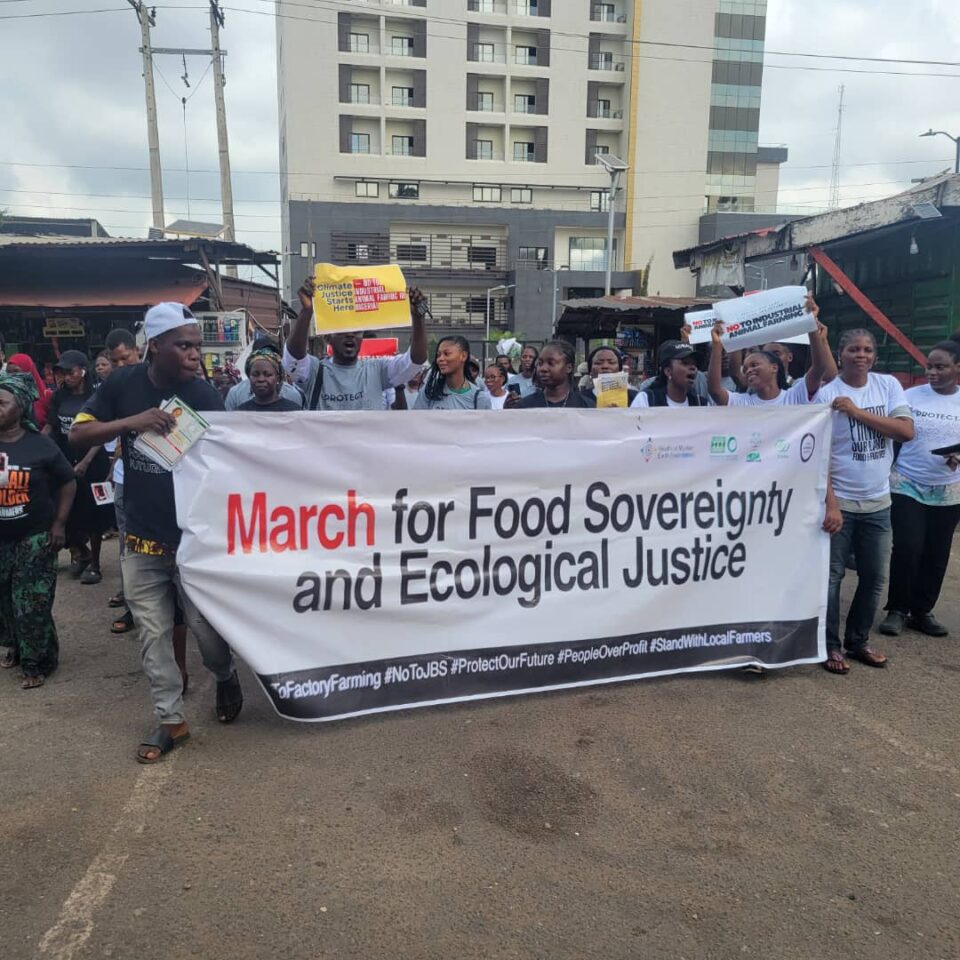
ABEOKUTA– Stakeholders in the agriculture sector have raised concerns over a growing threat posed by industrial animal farming on Nigeria food security, following the proposed JBS’s proposed $2.5 billion investment plan in the country.
Speaking with newsmen in Abeokuta, the Ogun state capital, Programme Manager at Youth in Agroecology and Restoration Network, Olawuyi Seyi warned that the planned establishment of six large-scale industrial livestock facilities by JBS, one of the world’s largest meat corporations, could displace millions of smallholder farmers, undermine traditional food systems, and fuel environmental degradation.
Seyi added that the scale of land required for the project signals an unprecedented threat, citing that the Niger State pledge of 1.2 million hectares of land as a massive land grab, which according to him suggests that much of the production will be exported rather than serve Nigeria’s food needs.
He therefore warned that JBS has been repeatedly linked to environmental scandals globally, including Amazon deforestation, labour abuses, tax evasion, and over 70 million tons of greenhouse gas emissions annually.
“This project appears extractive in nature and risks replicating colonial patterns of resource exploitation.
“Ogun State has been marked as a key investment hub due to its location and infrastructure, a corporate-controlled food system will endanger Nigeria’s food sovereignty and the livelihoods of smallholder farmers who currently supply 70% of the country’s food.
“There is no publicly available Environmental and Social Impact Assessment or evidence of thorough community consultations for such a massive project. Industrial animal farming is incompatible with Nigeria’s traditional food systems”, he said
The Deputy Director of Environmental Rights Action/Friends of the Earth Nigeria, Barr. Mariann Bassey-Olsson, represented by Adesuwa James Jang, reiterated that handing over food production to multinational corporations threatens farmer autonomy and long-term national food safety.
Bassey-Olsson cautioned that large-scale industrial farms risk displacing rural communities, eroding indigenous food cultures, and disrupting long-standing agricultural practices.
The stakeholders therefore called on the Federal Government to suspend the MoU signed with JBS, citing global reports of environmental abuses, deforestation, climate impacts, and socio-economic disruption in countries where the corporation operates.
They also urged Federal and State Governments to ensure comprehensive independent ESIA reports, mandatory community consultations, and transparent scrutiny before approving any large-scale agricultural investments.
The groups also demanded stricter regulations for multinational food corporations, including accountability frameworks, environmental safeguards, and protection of community rights.
