
In the engineering world, where precision, innovation, and relentless dedication are paramount, few stories resonate as profoundly as Jonas Obi Okoli’s.
From the bustling classrooms of Nnamdi Azikiwe University in Nigeria to the advanced research facilities of Zhejiang University in China, his journey epitomizes the transformative power of education, hard work, and a passion for solving complex problems. This article delves into his remarkable transition from mechanical engineering to maritime innovation, highlighting his significant contributions to the field and his current role at Praxis Qingdao Automation Technology.
Okoli embarked on his engineering journey at Nnamdi Azikiwe University, Awka, Nigeria, where he pursued a Bachelor’s Degree in Mechanical Engineering. His undergraduate years were marked by a deep curiosity and an unwavering commitment to leveraging engineering principles to address local challenges.
This commitment culminated in his Bachelors thesis, which focused on the development of a Compact Palm Oil Processing Machine. This innovative project aimed to enhance the efficiency and sustainability of palm oil production, a critical industry in many parts of Africa.
The project not only demonstrated his technical acumen but also his ability to apply theoretical knowledge to practical, real-world problems. This early exposure to the intricacies of mechanical engineering laid a robust foundation for his future endeavors.
After completing his undergraduate studies, he ventured into the maritime industry, driven by a fascination with the complexities of maritime operations and engineering.
He spent a year and a half working onboard a sea-going vessel, an experience that provided him with invaluable insights into the maritime environment. This hands-on experience was crucial in shaping his understanding of the practical challenges and opportunities within the maritime sector.
During this period, Okoli obtained the license of Officer of the Engineering Watch, a testament to his competence and dedication. In addition, he completed numerous safety and sea-going related trainings, further solidifying his expertise and readiness to tackle the demands of the maritime industry.
In 2016, Jonas Obi Okoli’s academic excellence was recognized with a prestigious scholarship from Zhejiang University, PR China. This opportunity allowed him to pursue a Master’s Degree in Naval Architecture and Ocean Engineering, a field that perfectly aligned with his burgeoning interest in maritime engineering.
His Masters thesis, titled “Simplified Fatigue Life Assessment of a Containership,” stands as a testament to his research prowess and innovative thinking.
The thesis focused on the fatigue analysis of the midship section of ULANGA, a 2200 TEU container ship designed by the Shanghai Merchant Ship Design & Research Institute (SDARI) and built by YangFan Group Co., LTD, PR China.
Fatigue, a critical phenomenon that leads to damage and failure around the welds at member connections of ship structures, was at the heart of Okoli’s research. In dynamic sea environments, high stress concentrations over long periods result in fatigue, which starts at localized spots and gradually spreads across the cross-section of structural members.
In his study, he analyzed the welded longitudinal reinforcement stiffener at the double bottom amid ship for fatigue using a simplified rule load by analytical procedures.
The findings from this analysis are significant, providing valuable guidelines for early design modifications, improvements, and periodic surveys to ensure compliance with Classification Societies’ guidelines.
The research revealed the sensitivity between fatigue damage and load, as well as the stresses acting on the section considered. Notably, increasing the plate thickness from 11 mm to 12 mm resulted in a 53.8% increase in fatigue life, extending it from 38 years to a significantly longer period. This insight underscores the importance of design adjustments in enhancing the longevity and safety of maritime structures.
Okoli has made significant contributions to the field of maritime engineering through his research and publications. One of his notable works is a journal article co-authored by him, titled “Structural Design and Analysis of Small Waterplane Area Buoy,” presented at OCEANS 2019 in Marseille, France, and published by the Institute of Electrical and Electronics Engineers (IEEE).
This paper addresses the design of ocean buoys, crucial for obtaining ocean data. The research established a mathematical model of an ideal cylindrical buoy structure and analyzed the influence of geometric size, average density, and system damping on the amplification factor of the buoy. The study proposed the design of a small waterplane area buoy, identifying an optimal radius size range for buoy design. Experimental models demonstrated that the small waterplane area buoy exhibited excellent stability, providing valuable insights for future marine buoy design.
The impact of Jonas Obi Okoli’s work is further evidenced by its notable citation in the research titled “Design of Low Power Consumption Marine Environment Monitoring System Based on STM32F407” by Jihui Peng, Ruiting Hao, Longgang Zhang, Changming Pan, Jinheng Yu, and Xin Gao. This citation underscores the relevance and applicability of his contributions to the field.
Beyond his academic achievements, Okoli has amassed extensive professional experience in the maritime industry. He has volunteered in various capacities as a marine surveyor and a marine instructor, sharing his knowledge and expertise with aspiring professionals. His commitment to the field is further demonstrated by his active membership in the American Society of Mechanical Engineers (ASME), where he engages with the professional community and stays abreast of the latest developments in mechanical engineering and the maritime industry.
He has also attended several marine, offshore, and clean energy exhibitions and conferences, showcasing his dedication to staying at the forefront of industry developments and networking with peers in the field.
Moreover, Okoli is a founding partner at Ningbo Jiezhi Company in China, where he interacts with different manufacturers to provide suitable solutions to clients.
This entrepreneurial venture underscores his commitment to creating practical solutions and advancing the clean energy sector through strategic partnerships.
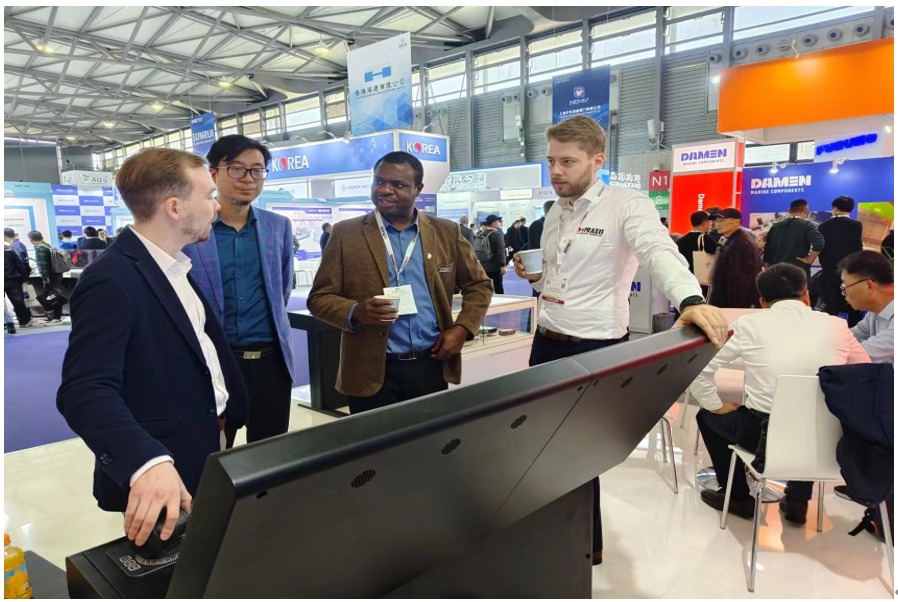
Pictures taken at Marintec China, Shanghai 2023. Jonas Obi Okoli 2nd person from the right hand
Today, he serves as the Technical and Business Development Manager at Praxis Qingdao Automation Technology. In this role, he oversees technical operations, develops business strategies, and drives innovation in automation technology within the maritime sector. His position allows him to leverage his technical expertise and business acumen to contribute to the growth and success of the company.
At Praxis Qingdao, he is instrumental in spearheading projects that integrate advanced automation technologies into maritime operations, enhancing efficiency, safety, and sustainability. His leadership and vision are pivotal in positioning the company as a leader in maritime automation solutions.
As he continues to make strides in the maritime industry, his vision for the future remains clear: to drive innovation and sustainability in maritime engineering. He envisions a future where advanced technologies and innovative engineering solutions are seamlessly integrated into maritime operations, ensuring safety, efficiency, and environmental sustainability.
His journey from mechanical engineering to maritime innovation exemplifies the power of interdisciplinary knowledge and the importance of continuous learning. By combining his expertise in mechanical engineering with his specialization in naval architecture and ocean engineering, Okoli has carved a unique niche for himself in the maritime industry.
Okoli’s journey is a testament to the transformative power of education, dedication, and a relentless pursuit of excellence.
From his early days at Nnamdi Azikiwe University to his groundbreaking research at Zhejiang University and his current leadership role at Praxis Qingdao Automation Technology, he has consistently demonstrated a commitment to advancing the field of maritime engineering.
His contributions to the design and analysis of maritime structures, particularly in the areas of fatigue assessment and buoy design, have had a lasting impact on the industry.
Moreover, his professional experiences and volunteer efforts reflect a deep-seated passion for sharing knowledge and fostering the next generation of maritime engineers.
As he continues to innovate and lead, Jonas Obi Okoli remains a beacon of inspiration for aspiring engineers and a driving force in the maritime industry’s pursuit of excellence and sustainability.
His story is not just one of personal achievement but also a powerful reminder of the profound impact that dedicated and visionary individuals can have on their fields and the world at large.
Okoli’s journey is far from over, and the maritime industry can look forward to many more groundbreaking contributions from this remarkable engineer and leader.
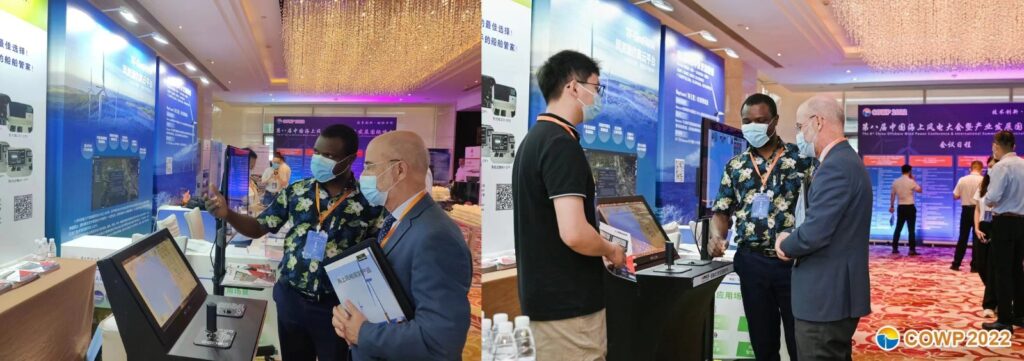
Pictures taken at China Offshore Wind Power Conference & International summit of industrial Development Guangzhou 2022
