

As Data becomes more essential in the fast growing global market, The News Ville speaks with Iremide Olatunji, an experienced data analyst on the role of data in growing the Nigeria economy.
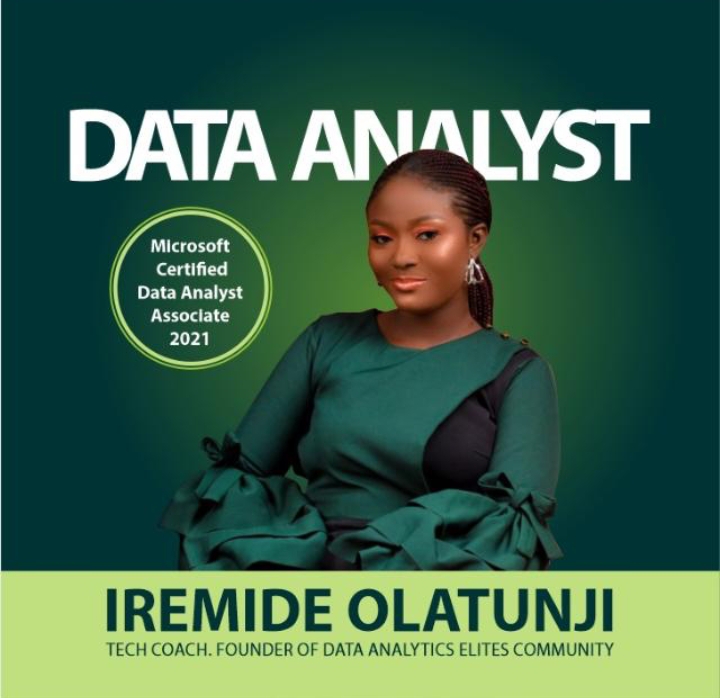
Q1. For the benefits of our readers, can you tell us your name
Ans: My name is Iremide Olatunji, the founder of Data @nalytics Elites Global Ltd. I am an experienced data analyst with over half a decade year of working experience in FMCGs, Retail and E-commerce organisations.
As a seasoned professional in data analytics, I specialise in delivering data-driven insights that empowers senior management in making informed decisions.
I am passionate about knowledge sharing and empowerment. I provide valuable training and support to stakeholders in navigating new reports and dashboards, ensuring that they harness the full potential of data-driven insights.
Over the years, I have trained several Corporate senior managers in data analytics helping them use data analytics to identify inefficiencies in their processes and supply chain, optimizing operations, reduce costs, improve productivity, and enhance overall organizational efficiency. This has directly contributed to increased profit margins.
Q2. What exactly do you do at Data Analytics
Ans: Data @nalytics Elites Global Ltd is a community of highly skilled data analysts who have gained expertise and mastery in the technical and leadership skills needed to thrive in the data analytics industry.
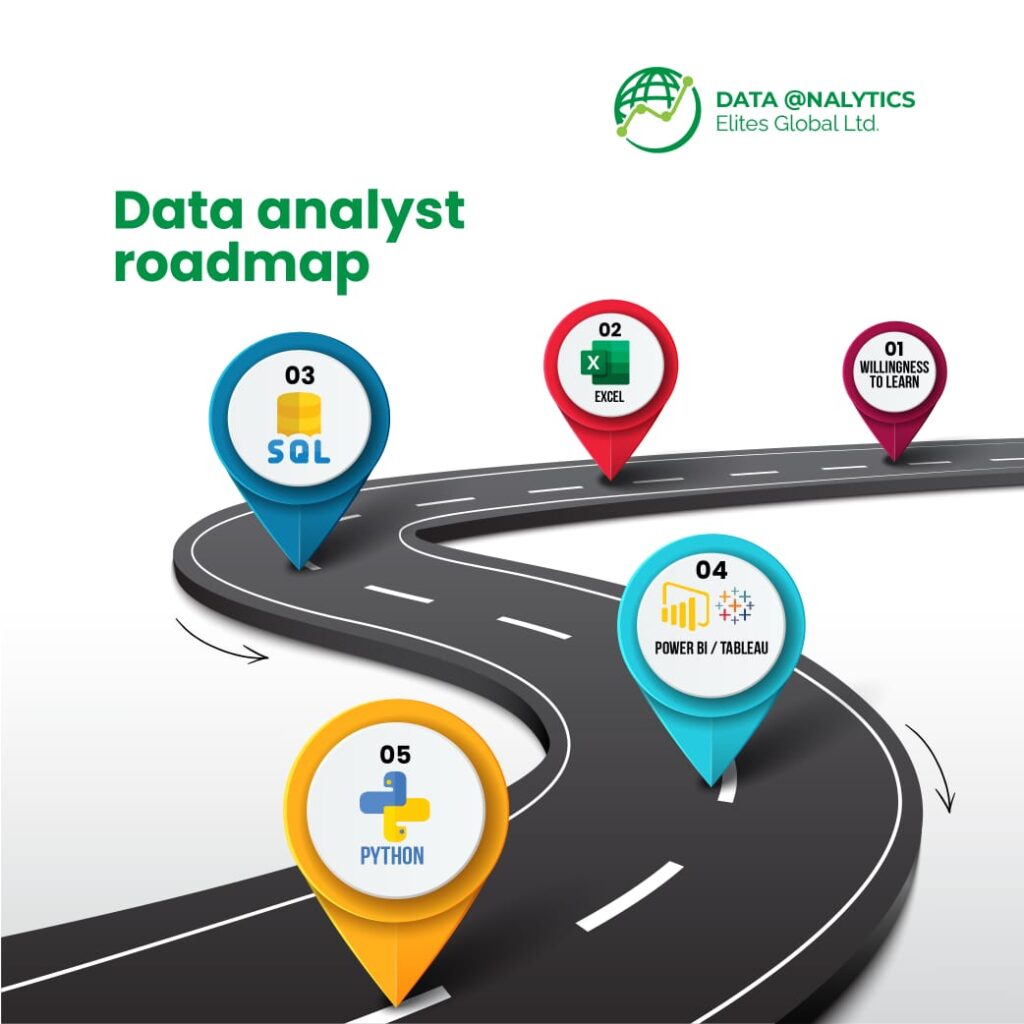
We are focused on mentoring aspiring data professionals who want to gain mastery in the data analytics tools, techniques, and technology such as Excel, Power BI, Tableau, SQL, and Python
We advocate the need for data literacy, recognizing it as a fundamental skill set that empowers individuals and businesses to make data driven decisions.
Q3. What’s the significance of Data Analytics to Nigeria National Economic Development
Ans: Data literacy can play a crucial role in the development of Nigeria by empowering individuals, businesses, and the government to make informed decisions, drive innovation, and address socio-economic challenges.
Here are several ways in which data literacy can contribute to the development of the country:
- Informed Decision-Making: Data literacy equips individuals and organizations with the ability to analyze and interpret data. In various sectors such as healthcare, education, agriculture, and finance, informed decision-making based on data-driven insights can lead to more effective policies and strategies.
- Economic Growth and Innovation: Businesses that are data-literate can harness insights to identify market opportunities, optimize operations, and innovate products and services. This can contribute to economic growth by fostering a more competitive and dynamic business environment.
- Public Sector Efficiency: Government agencies with a high level of data literacy can improve public service delivery, resource allocation, and policy formulation. Data-driven governance can enhance transparency, reduce corruption, and optimize the impact of public investments.
- Education and Skill Development: Fostering data literacy in the education system helps students acquire essential skills for the job market. This, in turn, contributes to the development of a skilled workforce that can drive technological advancements and economic diversification.
- Entrepreneurship and Small Businesses: Data literacy is valuable for entrepreneurs and small businesses. It allows them to understand market trends, customer preferences, and operational efficiency, fostering the growth of a vibrant entrepreneurial ecosystem.
Q4. Tell us about your upcoming trainings and what you intend to achieve with it
Ans: All our classes are virtual via Google meet. This is to ensure accessibility for wide range of participants.
Data Analytics is broken down into three phases:
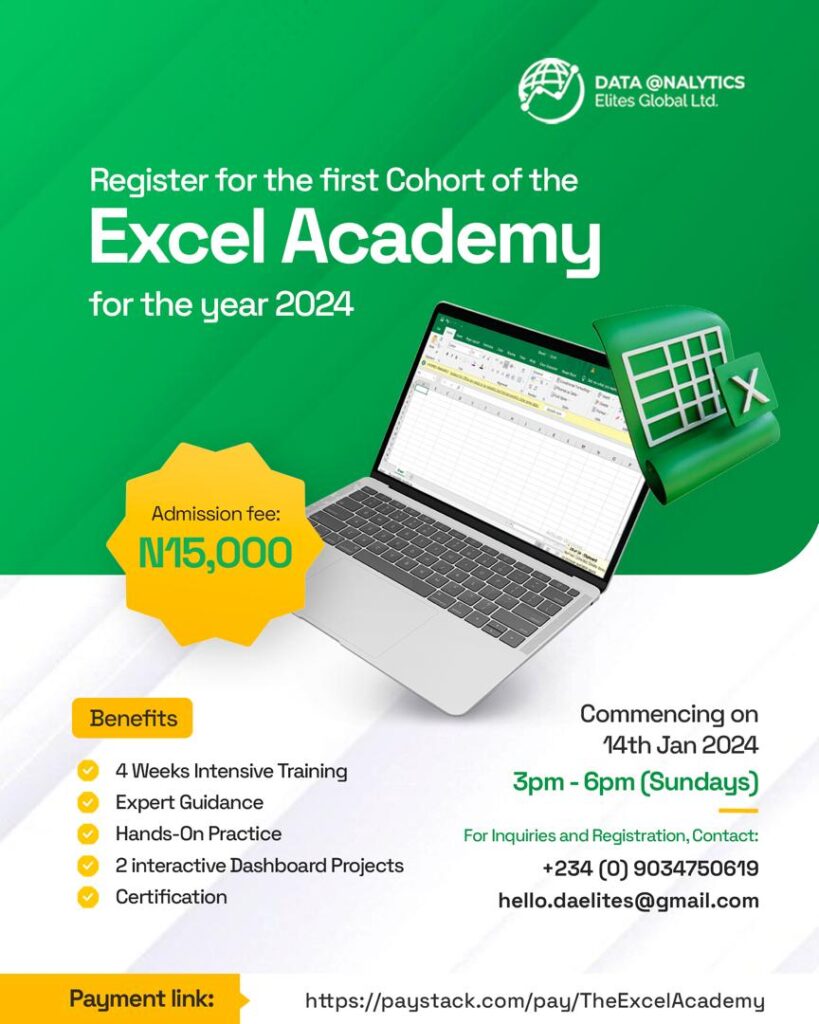
Beginners Phase: Learning Microsoft Excel for data analysis.
Duration of learning Microsoft Excel is 4 weeks.
Course starts: 14th January 2024.
Tuition Fee: N15,000
Intermediate Phase: Learning Microsoft Power BI or Tableau.
Duration of learning Power BI or Tableau is 8 weeks.
Power BI Course starts: 21st January 2024
Tableau Course starts: 4th February 2024
Tuition Fee:N30,000
Advanced Phase: Learning SQL and Python
Duration of learning SQL or Python is 8 weeks
SQL Course starts: 4th February 2024
Python Course starts : 25th February 2024
Tuition Fee: N30,000

Q5. How can the training help the beneficiaries in the long run?
Ans: It gives them access to be mentored by some thought leaders in the data analytics field who are working for Flutterwave, Omnibiz, ARM among others.
They are in a community where they can easily get access to Job Opportunities to help start their career in data analytics.
The best performing student in the Academy will be selected to work with a partner
Q6. Where do you see Data Analytics in the next 5 years
Ans: Demand for Data Analytics Expertise will increase greatly: There are 2.5 quintillion bytes of data created each day from Internet, social media, Communication devices and Internet of Things (IoT).
At every given time data is generated, there is a demand for these data to be analysed to help businesses, government and individuals make smart choices and decisions. Given the rapid evolution of technology in the data analytics field, professionals will need to engage in continuous learning and upskilling to stay abreast of new tools, methodologies, and best practices.
Increased Automation and AI Integration: The use of artificial intelligence (AI) and machine learning (ML) in data analytics is likely to become more prevalent. Automation tools will assist in data processing, analysis, and even decision-making, allowing analysts to focus on more complex tasks.
Advancements in Predictive Analytics: Predictive analytics will continue to evolve, becoming more accurate and sophisticated. This will enable organizations to anticipate trends, identify patterns, and make proactive decisions based on future predictions.
Greater Emphasis on Data Privacy and Ethics: As data becomes more central to decision-making, there will be an increased focus on data privacy, security, and ethical considerations. Stricter regulations and guidelines are likely to emerge, and organizations will need to adopt robust data governance practices.
Integration of IoT Data: With the proliferation of Internet of Things (IoT) devices, there will be an influx of data generated by sensors and connected devices. Data analytics will play a crucial role in extracting meaningful insights from this vast amount of IoT-generated data.
Expanded Role in Healthcare and Genomics: Data analytics will continue to make significant contributions to healthcare and genomics. The analysis of large datasets in these domains can lead to personalized medicine, improved patient outcomes, and advancements in medical research.
